Finding your voice
Three minutes about one of the most urgent responsibilities of your life.
“Most men lead lives of quiet desperation and go to the grave with their song still in them.” — Henry David Thoreau
James Earl Jones, maybe the world's most famous voice, has died.
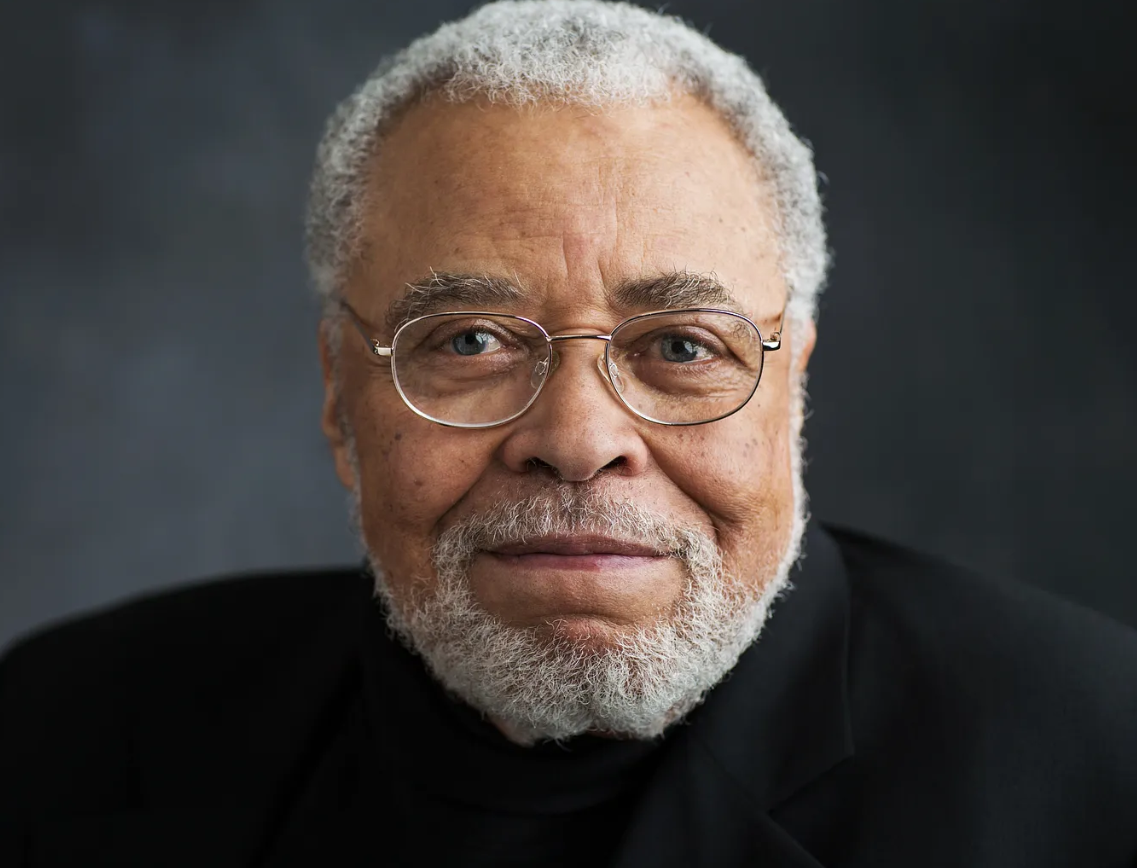
He voiced two of the most iconic parts in movie history — Darth Vader in Star Wars and Mufasa, father of Simba in The Lion King.
It might have been different.
He landed the part in Star Wars in 1977, when he was an actor already approaching 50, with a decent resumé on stage and screen but zero star attraction. Later, he recalled that the movie’s director, George Lucas, could easily have gone in a different direction.
“The rumor is that he thought of Orson Welles. And then probably thought that Orson might be too recognizable.”
James Earl Jones’s voice feels almost eternal now, nearly half a century later, with the words and tone of characters like Darth Vader and Mufasa forever available to our inner ear, but it did not come out fully formed. It took decades to become what it eventually became.
He said:
“[Lucas] ends up picking a voice that was born in Mississippi, raised in Michigan, and was a stutterer. And, that happened to be my voice.”
Few of us will ever get to have a “voice” as recognizable as that of James Earl Jones.
But that doesn’t matter. Because your voice is every bit as distinctive and vital to your life as Jones’s was to his.
Your voice — the one that might still be forming inside your body, waiting for the day that it emerges — is your representation of how you do anything.
It’s not just about writing, or speaking, or singing. It’s all of those and more. It’s two things together. It’s who you are as you express yourself to the world. It’s where the inner you and the outer you meet in harmony.
So if your voice as vital to your life, how do you go about finding it?
The writer and poet Larry Woiwode, who died in 2022 at the age of 80, taught classes of aspiring writers about the subject of voice. It had taken Woiwode many years to find his own voice, and then he spent many more teaching what he’d learnt to others.
He once wrote of that journey to finding his own voice, which involved years of reading his work aloud, to his girlfriend-then-wife but also to his own ear.
In the past, he said, often advice to writers had been about creating a persona or developing a style, and that this act of creating and developing was what brought about the “voice”.
But, Woiwode said, finding one’s voice was much less about constructing a style and much more about uncovering a truth.
He wrote:
“I was troubled at times by encouragers who said about a future moment I feared, an interview or public performance, ‘Just be yourself.’ I wasn’t sure who that was.”
As he scraped away at the dust covering “who that was”, he found that:
“At the center of any credible truth is an individual voice as identifiable as a fingerprint.”
He also found — and this might be even more relevant now, in our technologically interconnected age, than ever before in history — that finding his own voice and bringing it to the surface did not necessarily make things any easier. He might have found and embraced the truth and expressed it in his own unique voice, but he also discovered that that truth was often hard for others to hear.
“The clearer my voice became, the more my work met resistance.”
This, then, the task of finding your voice and bringing it to the world, is both a principal challenge and principal responsibility of your life.
And you must face this challenge and take on this responsibility with some urgency. Your whole life demands it.
There are some who would say that this whole topic is vain and egotistical.
But do not mistake the desire to find your voice as ego.
It is not ego to bring your unique and truthful voice to the world.
It is the ego that covers it up in style and embellishment and falsehood.
Because let’s face it. If we’re truly honest with ourselves, none of us want to approach the end with our song, as Thoreau said, still buried within us and bound for the grave.